
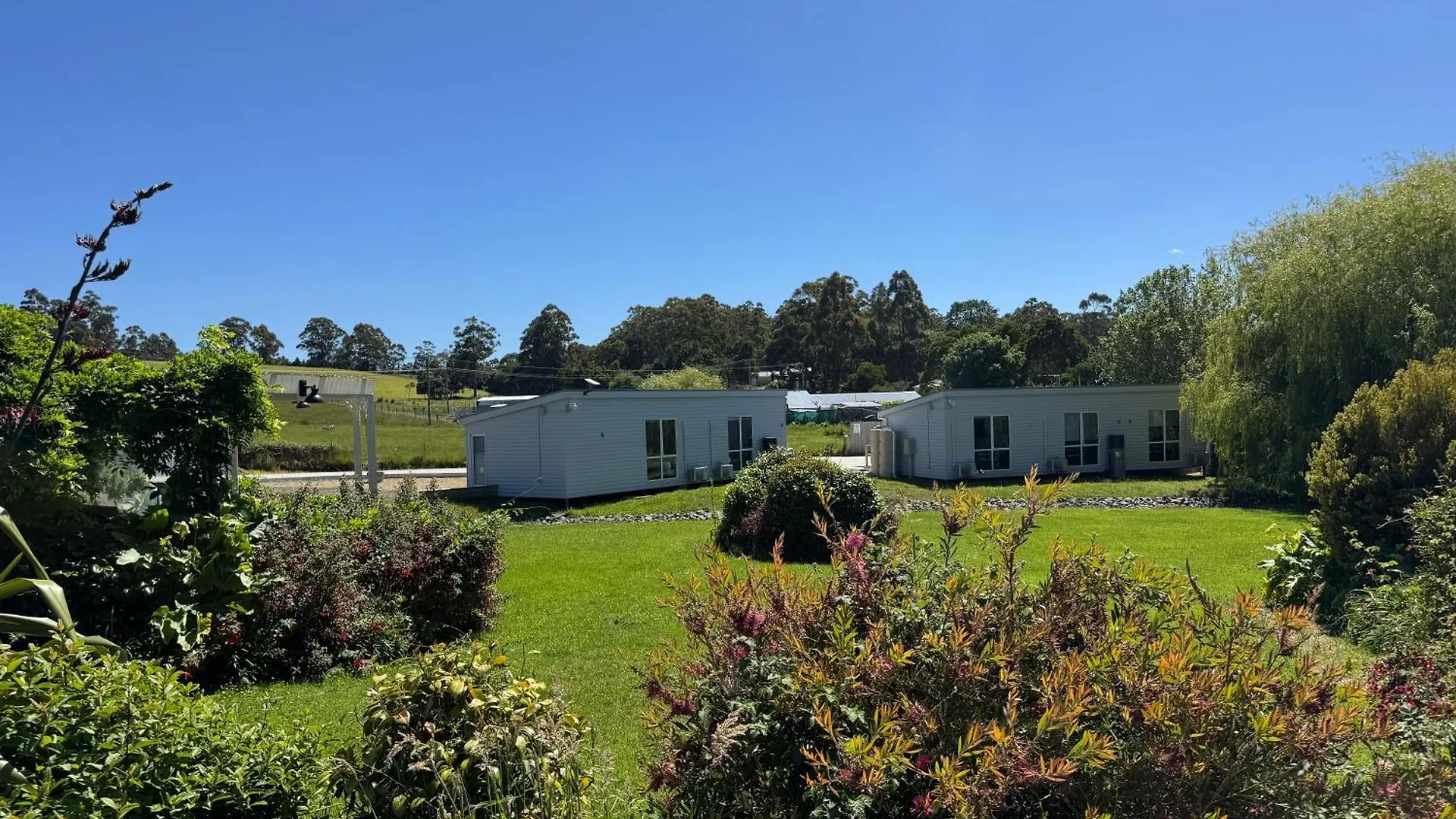
Tasmania holds some of Australia's most significant colonial and convict heritage, and staying in or near these historic sites adds genuine depth to any visit. This guide covers five hotels positioned close to Tasmania's most compelling heritage destinations - from Port Arthur's UNESCO-listed convict ruins to the 19th-century wool town of Bothwell - helping you choose where to stay based on location, access, and what each property actually delivers.
What It's Like Staying in Tasmania
Tasmania is Australia's only island state, separated from the mainland by the Bass Strait, which means getting around requires a domestic flight or the Spirit of Tasmania ferry - there's no driving in from interstate. Once on the ground, a car is essential; public transport between towns is minimal, and most historic sites, national parks, and coastal areas are only accessible by road. The island is compact enough that Hobart, Strahan, Swansea, and Port Arthur are all within a half-day's drive of each other, making multi-destination itineraries genuinely practical.
Tasmania draws visitors who prioritise nature, history, and food over nightlife and urban buzz. Crowds concentrate around the east coast and Port Arthur in summer (December-February), while off-season travel in autumn and winter rewards with lower prices and near-empty heritage sites. Around 40% of the island is protected land, meaning heritage towns sit directly alongside wilderness - a combination that makes Tasmania unlike any other Australian state for historically-minded travellers.
Pros:
- Compact geography makes multi-site heritage travel realistic in one trip
- Historic sites like Port Arthur receive far fewer crowds than comparable mainland attractions
- Strong local food and wine culture concentrated in small towns near heritage areas
Cons:
- No car means limited or no access to most heritage and natural sites
- Weather is unpredictable year-round - snow is possible even in spring
- Accommodation in heritage towns books out fast in peak summer weeks
Why Choose Historical Hotels in Tasmania
Choosing a historically-positioned hotel in Tasmania means staying within walking distance or a short drive of convict-era ruins, colonial farm estates, and 19th-century fishing villages - context you simply can't replicate from a generic Hobart city hotel. These properties range from self-contained villas adjacent to a UNESCO World Heritage site to a working farm that predates European colonisation of the Australian mainland, offering an immersive quality that standard accommodation cannot match. Rates at heritage-adjacent properties in regional Tasmania are typically more competitive than equivalent character stays in Sydney or Melbourne, often sitting around 20-30% lower for comparable room quality.
Room sizes at these properties tend to be generous - self-contained villas and chalets are the dominant format, giving travellers kitchen access and private outdoor space that boutique city hotels rarely offer. The trade-off is that most are in small towns with limited dining options beyond the property itself, so self-catering capacity matters. Properties near active heritage sites also attract day visitors, which can create brief congestion at entry points in peak season.
Pros:
- Walking or driving distance to convict ruins, colonial estates, and UNESCO-listed sites
- Self-contained formats with kitchens reduce daily food costs in towns with few restaurants
- Authentic rural and coastal settings that city hotels in Tasmania cannot replicate
Cons:
- Most heritage towns have limited dining beyond the accommodation itself
- Not suited to travellers who want urban amenities, nightlife, or walkable city centres
- Some properties have unattended reception, requiring self-check-in coordination
Practical Booking & Area Strategy
Tasmania's heritage hotels are spread across four distinct zones: the Tasman Peninsula (Port Arthur), the Central Highlands (Bothwell), the East Coast (Swansea and Freycinet), and the West Coast (Strahan). Hobart serves as the main transport hub, with Hobart Airport connecting to Melbourne and Sydney - all four of these heritage zones are driveable from Hobart, with Port Arthur around 1 hour, Bothwell around 1.5 hours, Swansea around 1.5 hours, and Strahan around 3.5 hours. Planning a logical clockwise or anticlockwise loop around the island prevents backtracking and maximises time at each heritage zone.
The most visited single site in Tasmania is Port Arthur Historic Site, a former convict settlement and one of Australia's 11 UNESCO World Heritage-listed convict sites - arriving before 9 AM or after 3 PM significantly reduces queues at peak season. On the east coast, Freycinet National Park and Wineglass Bay draw hikers who stay in Swansea as a more affordable base than Coles Bay. Strahan is the gateway to the Gordon River and Macquarie Harbour, a remote west coast destination where accommodation options are genuinely limited, making advance booking essential. Bothwell, home to Ratho Farm, is the oldest golf course in the Southern Hemisphere - a specific drawcard that justifies the detour for golf travellers and history enthusiasts equally.
Best Value Historical Stays
These properties offer strong location credentials near major heritage and coastal attractions, with self-contained formats that deliver practical flexibility for independent travellers on multi-day Tasmanian itineraries.
-
1. Amadiya Port Arthur Villas
Show on map


 Check-infrom 14:00 until 23:00Check-outfrom 09:00 until 10:00
Just a few rooms left at the best rate!
fromAU$ 219
-
2. Swansea Motor Inn Tasmania
Show on map


 Check-infrom 14:00 until 23:59Check-outuntil 10:00
Just a few rooms left at the best rate!
fromAU$ 115
-
3. Swansea Beach Chalets
Show on map


 Check-infrom 14:00 until 17:00Check-outfrom 08:00 until 10:00
Hurry – almost gone at this price!
fromAU$ 198
Best Premium Historical Stays
These two properties go beyond accommodation to deliver an experience directly tied to Tasmania's colonial and maritime heritage - one on a working 19th-century farm estate in the Central Highlands, the other in a boutique hotel overlooking Macquarie Harbour on the remote west coast.
-
4. Ratho Farm
Show on map


 Check-infrom 15:00 until 20:00Check-outfrom 08:00 until 10:00
Hurry – almost gone at this price!
fromAU$ 211
-
5. Risby Cove Boutique Hotel
Show on map


 Check-infrom 14:00 until 17:00Check-outuntil 10:00
Rooms filling fast – secure the best rate!
fromAU$ 194
Smart Travel & Timing Advice for Tasmania
Tasmania's peak tourism season runs from December through February, when school holidays, Hobart's summer events, and the Sydney to Hobart Yacht Race (late December) push accommodation prices up significantly and fill heritage-zone properties weeks in advance. Booking at least 8 weeks ahead for peak summer stays near Port Arthur or Strahan is a minimum - west coast properties like Risby Cove in Strahan have limited inventory and sell out faster than east coast options. March through May (autumn) is widely considered the best balance of good weather, lower prices, and thinner crowds at heritage sites; the deciduous trees planted by early settlers around Bothwell and the Midlands turn amber and red, adding visual context to the colonial landscape.
Winter (June-August) brings the lowest rates across all five properties and near-empty heritage sites - Port Arthur in winter, with evening ghost tours and mist over the ruins, is a genuinely different experience from the summer day-tripper version. A minimum of 5 nights in Tasmania is realistic to cover Port Arthur, the east coast, and one of either the west coast or Central Highlands without feeling rushed; attempting the full island in under 4 nights results in long driving days that undercut the experience. Last-minute availability is rare in December and January - book early or target shoulder season for the best combination of value and access.


